Some haircuts look expensive because of the styling. The architectural bob looks expensive because of the lines. It is the number one cut in the 2027 trend roundups for a reason: a graphic, blunt shape that falls at the jaw, with clean edges and no layers to hide behind. The shape itself does the work, which is why it photographs like a salon cut even on a Tuesday morning.
Its softer cousin, the Scandi bob, is the same idea worn the Scandinavian way: a clean blunt perimeter, almost no internal layering, and a finish that looks good air-dried. Both versions share one secret — the strong baseline makes fine hair look thicker at the ends, and the precision makes everything else look intentional. These 17 architectural bob haircuts cover every version, from razor-sharp graphic cuts to soft, wearable Scandi bobs, so you can find the one that fits your hair and your life.
1. Classic Architectural Bob with a Blunt Baseline
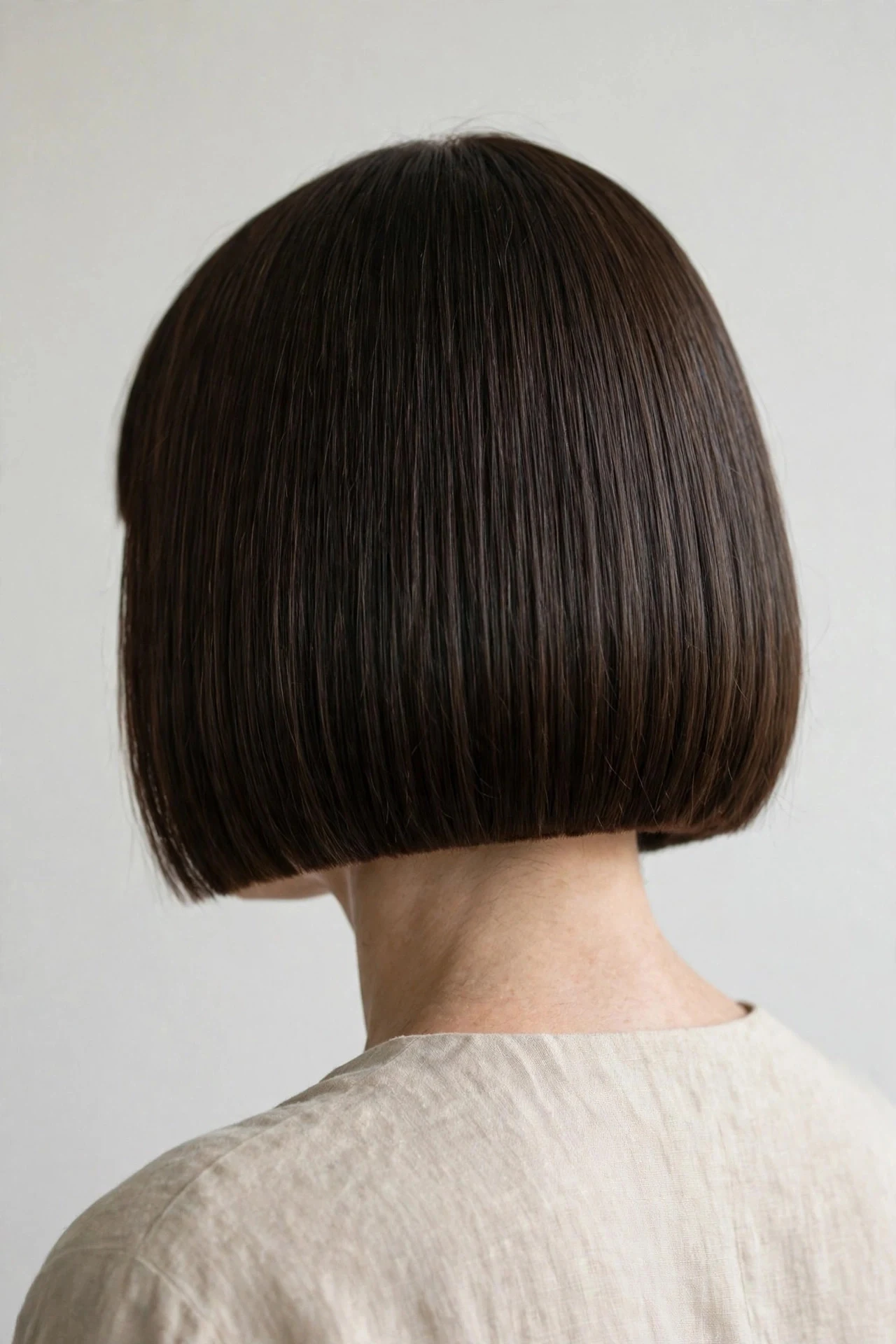
The classic architectural bob is the purest form of the cut: one length, jaw level, with a blunt baseline so sharp it looks drawn with a ruler. There are no layers to soften it, and that is exactly the point. The clean line creates an impression of density that makes fine hair look twice as thick at the ends.
Ask your stylist for a one-length cut with zero internal layers and a baseline that sits right at the jaw. Keep it pin-straight with a flat iron and a drop of shine serum, and the graphic line will do all the talking.
2. Scandi Bob with a Soft Middle Part

The Scandi bob takes the same blunt shape and wears it the Scandinavian way: relaxed, natural, and never over-styled. A soft middle part keeps it symmetrical and calm, and the ends are left to fall where they fall instead of being forced into a perfect curve. It is minimalism you can actually live with.
This is the best first architectural bob if you are nervous about a graphic cut. The middle part balances every face shape, and the cut still looks polished when you air-dry it, which is the whole Scandi promise.
3. Jaw-Length Graphic Bob with a Deep Side Part
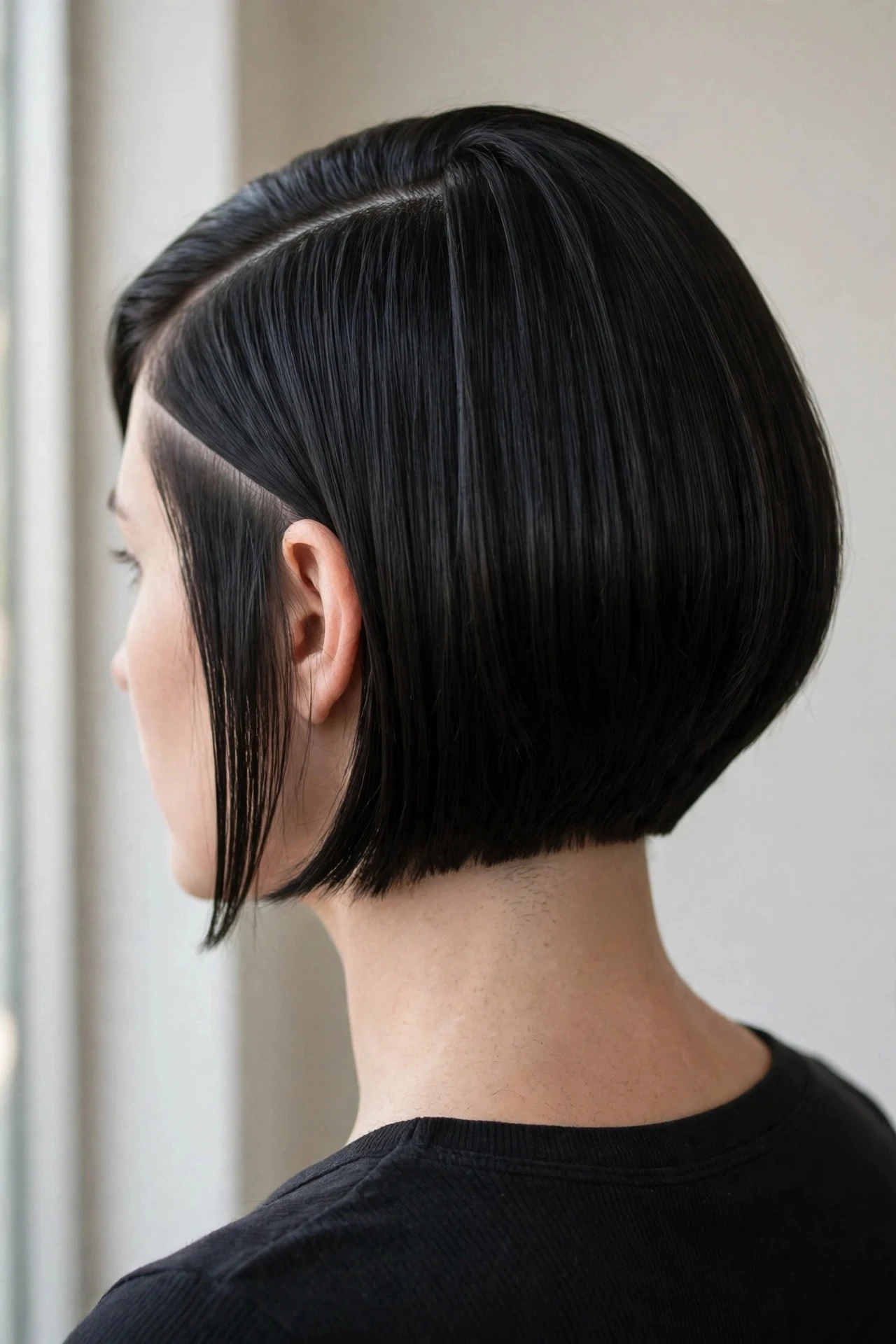
A deep side part turns a graphic bob into a statement. All the weight sweeps to one side, the longer side falls in a clean diagonal across the cheek, and the shorter side tucks neatly behind the ear. On sleek black hair the contrast between the shine and the sharp line is almost architectural in the literal sense.
Ask for the part to sit well off centre and the longer side to end just below the jaw. Blow-dry the heavy side smooth with a paddle brush and let the line stay crisp — this version looks best when nothing is tousled.
4. Architectural Bob with Micro Bangs
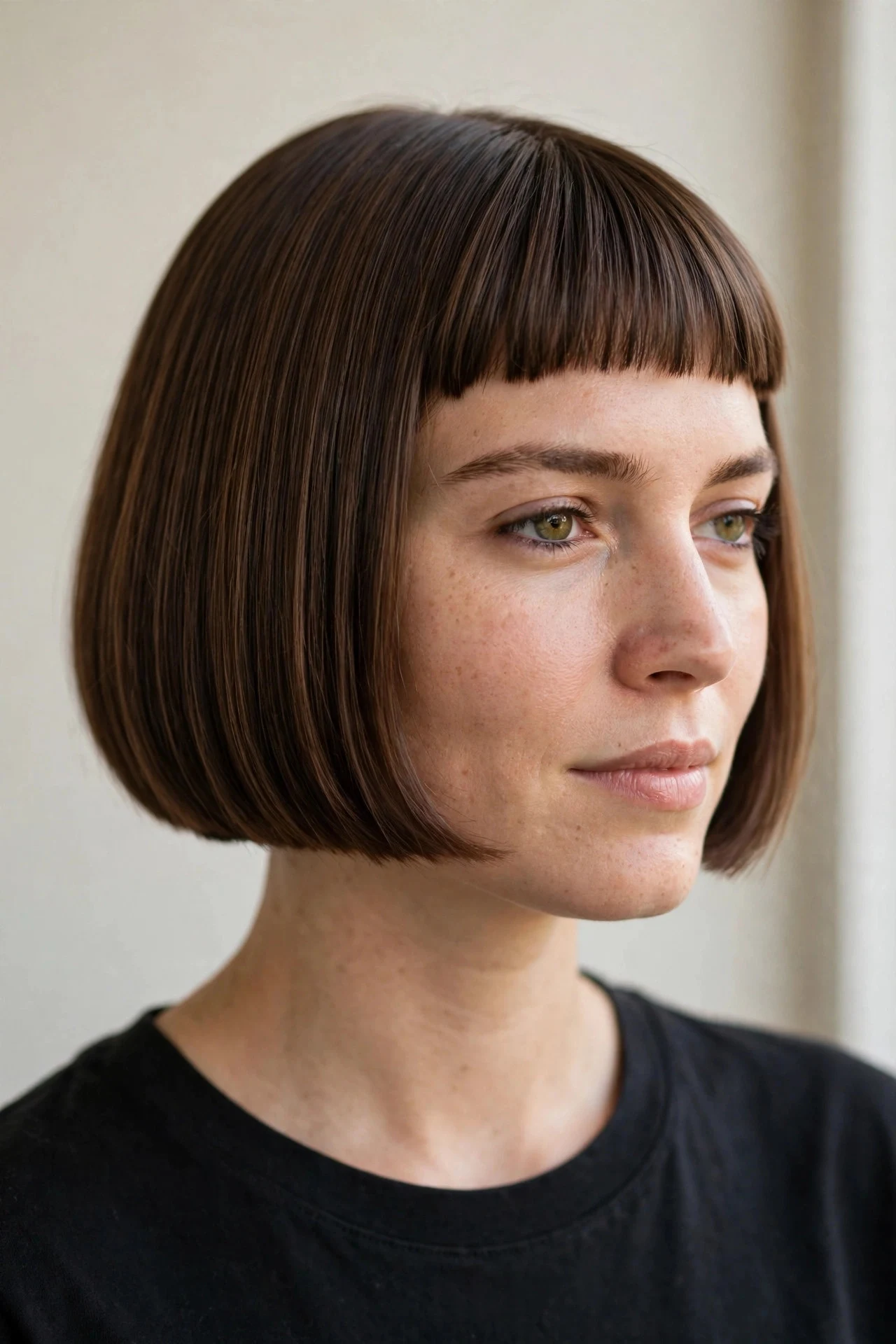
Micro bangs are the boldest way to wear an architectural bob. The short, blunt fringe sits well above the brows and mirrors the blunt baseline below, so the whole cut becomes one geometric frame around the face. It is the version that gets photographed most, because the shape is impossible to miss.
This cut suits strong features and straight hair best. The fringe needs a trim every two to three weeks to stay above the brows, so only book it if you are happy with quick salon visits or a steady hand with scissors at home.
5. Sleek Glass-Hair Architectural Bob
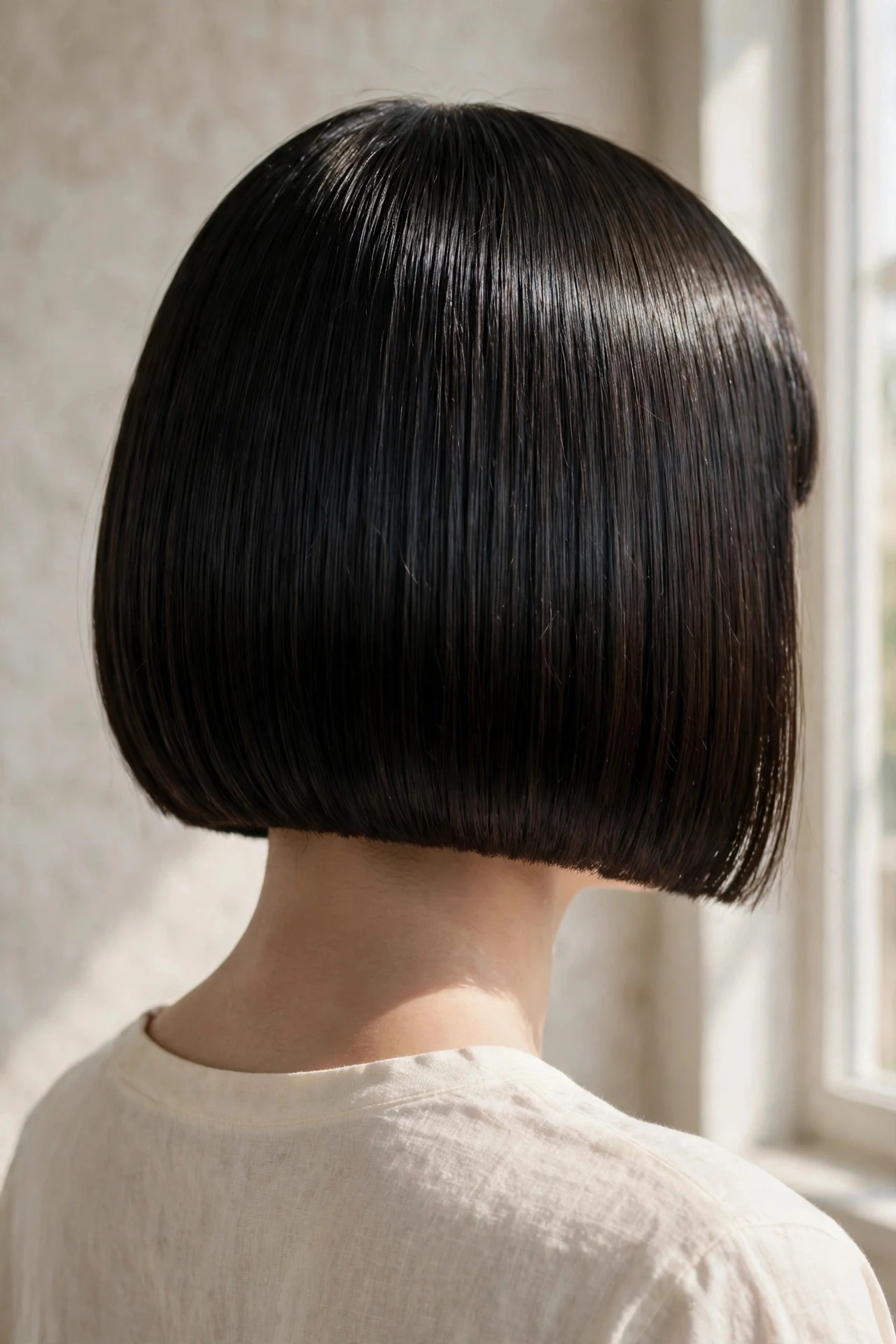
Glass hair is the architectural bob at its glossiest. The hair is pin-straight, the surface reflects light like a mirror, and the blunt ends look like they were cut with a laser. When the shine is this strong, the cut reads expensive from across the room, even before anyone notices the shape.
Shine is a routine, not a one-day trick. Use a smoothing shampoo, a heat protectant, and a flat iron in slow passes, then finish with a pea-sized drop of shine serum on the ends only. Skip heavy oils at the roots or the glass turns greasy by noon.
6. Scandi Bob with a Slight Wave
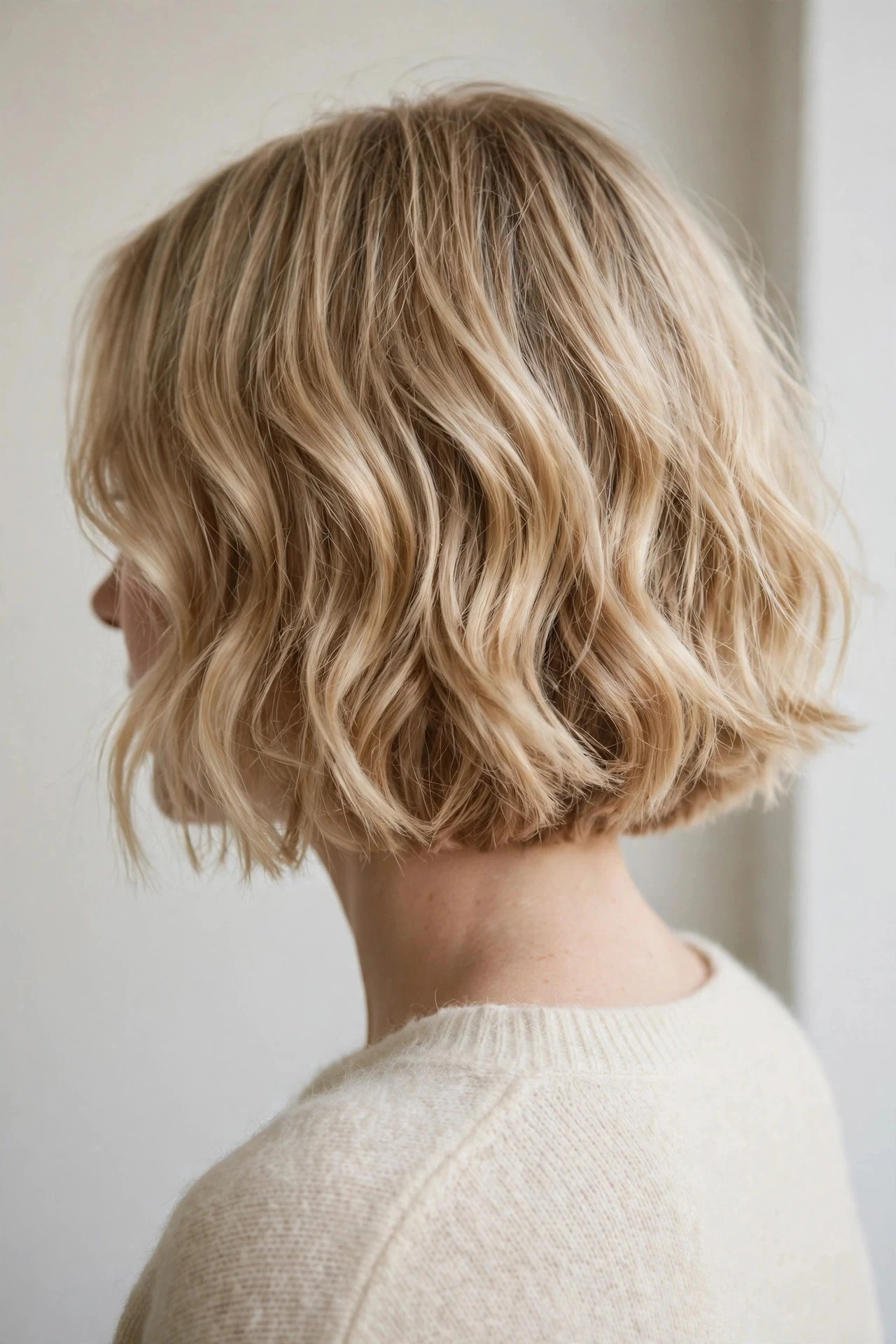
If the razor-sharp version feels too strict, the Scandi bob with a slight wave is your answer. The blunt perimeter stays, but a soft bend through the lengths keeps it from looking stiff. It is the lived-in version of the trend — the one that still looks intentional after a day of wearing it.
Wrap two or three wide sections around a large curling iron, leave the ends straight, and brush through with your fingers. The wave should look like your hair dried that way on its own, not like you spent an hour on it.
7. Architectural Bob with an Undercut Nape
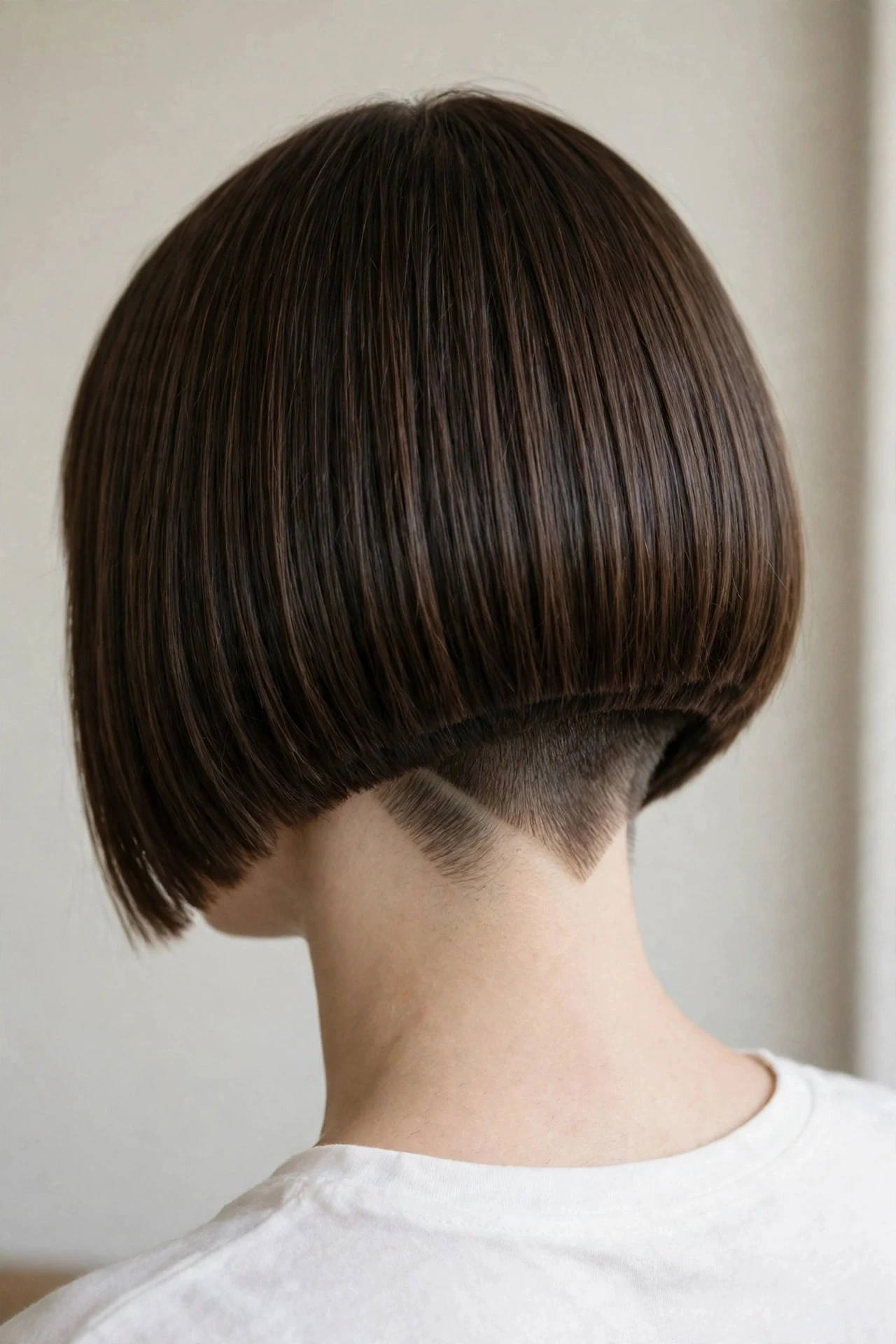
An undercut nape is the hidden engineering inside an architectural bob. The hair at the nape is tapered close, so the top layers fall over it in a clean, curved shape with no bulk pushing the ends outward. From the back, the silhouette looks carved rather than cut.
This is the version to ask for if your hair is thick and your bobs always flip out at the back. The undercut removes the weight that causes the flip, and it grows out gracefully because it is hidden under the top layer the whole time.
8. Chin-Length Blunt Bob with Tucked Ends
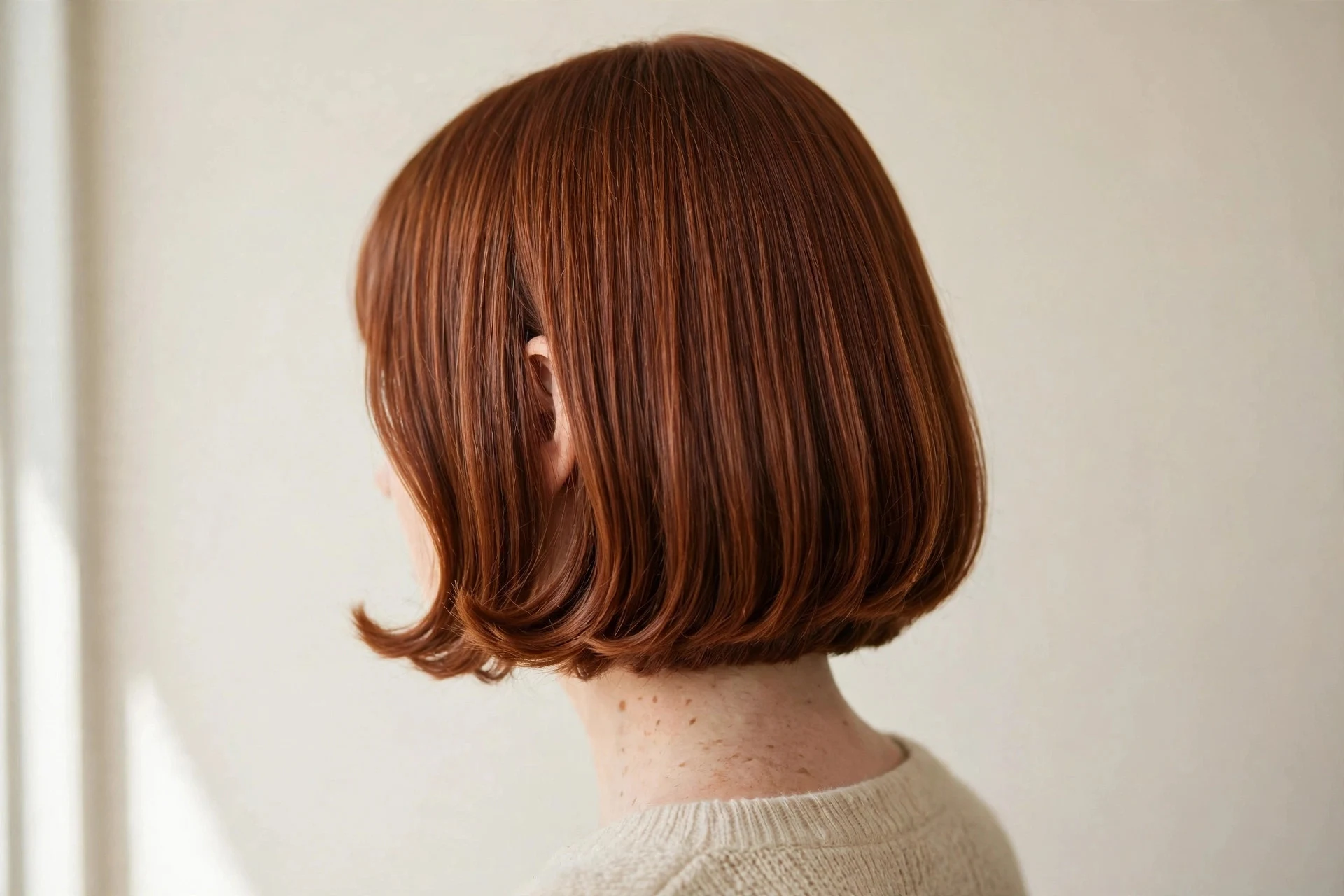
Tucking the ends under is the oldest trick in the bob book, and on an architectural cut it looks brand new. The chin-length baseline curves gently inward, framing the jaw and making the whole shape feel sculpted. On auburn hair the tucked ends catch the light in a way straight ends never do.
Blow-dry the ends under with a medium round brush, one section at a time, and let each section cool before you drop it. The cooling time is what sets the curve, so it holds all day instead of falling flat by lunch.
9. Scandi Bob in Cool Ash Blonde
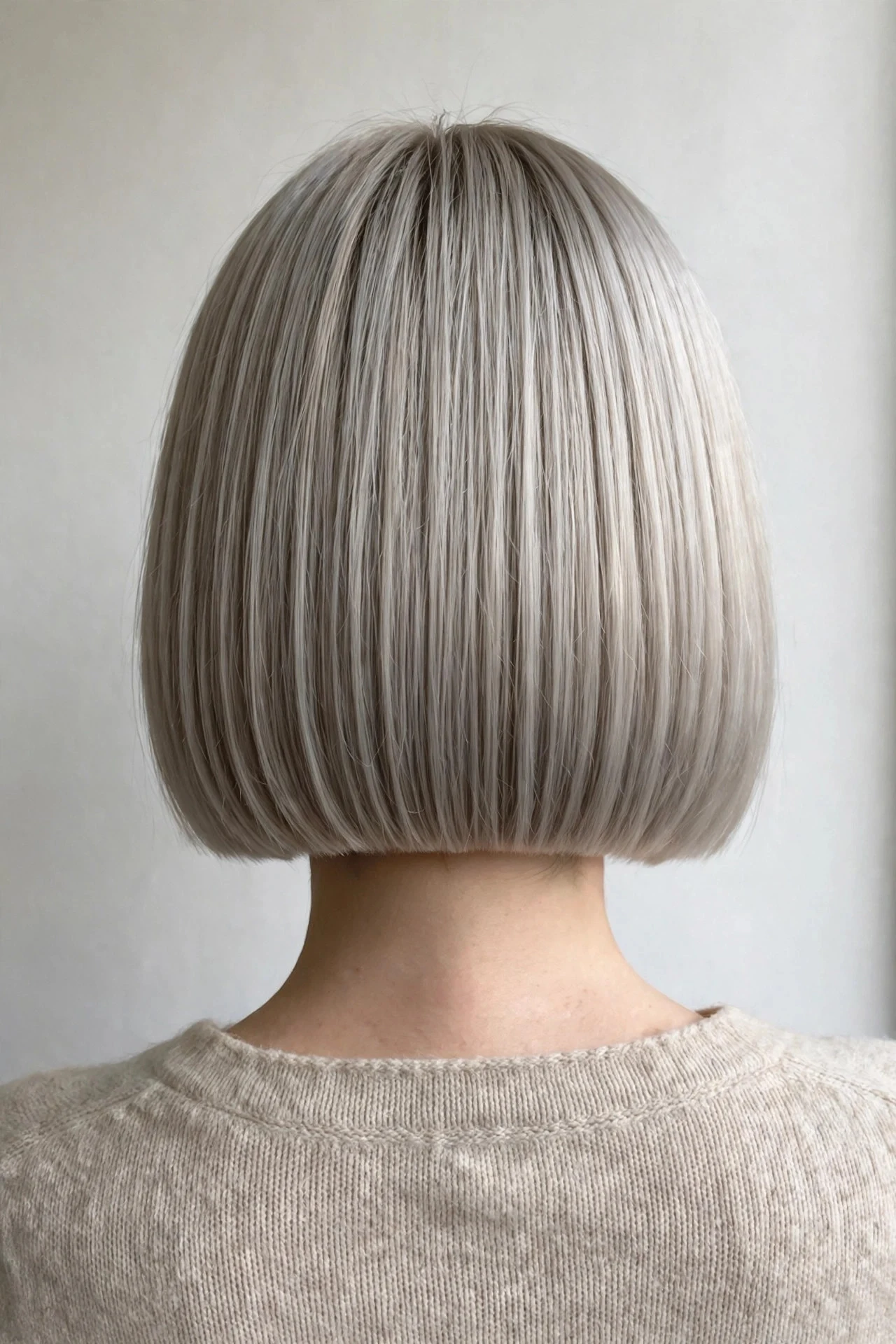
Cool ash blonde is the colour most often paired with the Scandi bob, and it is easy to see why. The smoky, muted tone matches the cut’s quiet confidence — nothing shouts, everything looks considered. The blunt perimeter shows the colour off in one clean block instead of breaking it up with layers.
Keep the ash from turning yellow with a purple shampoo once a week, and ask your colourist for a root shadow so the grow-out stays soft. The cut’s simplicity means the colour has to be right, so a good toner appointment matters as much as the cut itself.
10. Architectural Bob with Curtain Bangs

Curtain bangs soften an architectural bob without breaking its rules. The bangs part in the middle and melt into the front of the cut, so the face gets a soft frame while the back keeps its graphic line. It is the best compromise if you love the blunt shape but want something gentle around your eyes.
Ask for the bangs to start at the cheekbone and blend into the front pieces, so there is no hard line where the fringe ends. Blow-dry them away from your face with a round brush and they will fall open on their own.
11. Textured-Edge Architectural Bob for Thick Hair

Thick hair can make a one-length bob look like a helmet, but a textured edge fixes that without adding layers. The stylist point-cuts just the last inch of the ends, so the shape stays graphic while the bulk disappears. You keep the strong silhouette and lose the triangle.
The key word to use at the salon is texture, not layers. Layers would break the architectural line; point-cutting only softens it. Ask for the texture to stay in the bottom inch so the shape holds from every angle.
12. Scandi Bob with a Low-Maintenance Air Dry
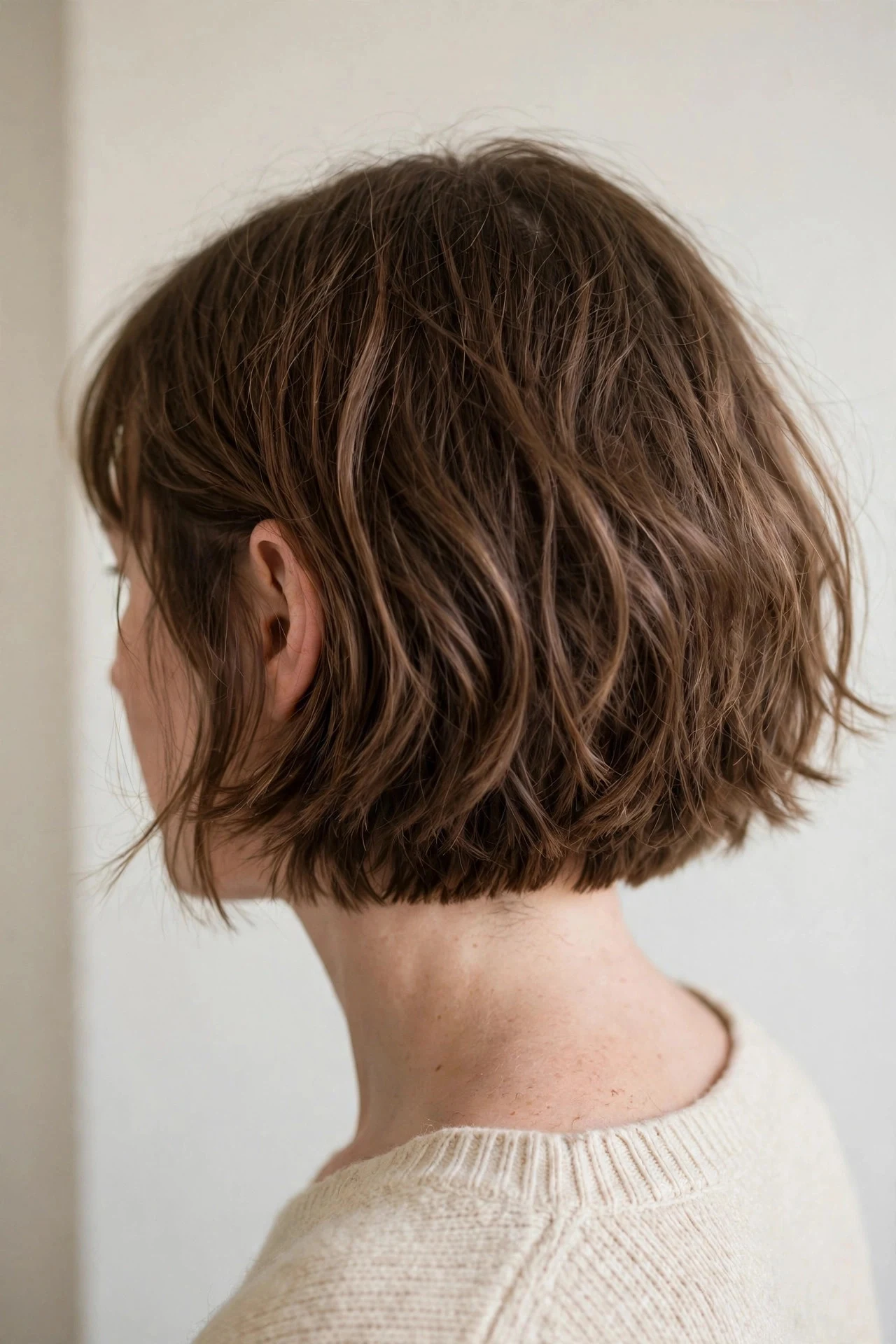
This is the Scandi bob’s real superpower: it looks good with almost no effort. Because there are no layers to style and no shape to force, you can wash it, scrunch in a little cream, and let it dry while you get on with your morning. The cut’s structure does the styling for you.
Celebrity stylists call it the most low-maintenance bob you can get, because with little to no layering you are less likely to wake up feeling like you need to redo your routine. A pea-sized amount of air-dry cream on damp hair is the entire styling step.
13. Architectural Bob with a Sharp A-Line
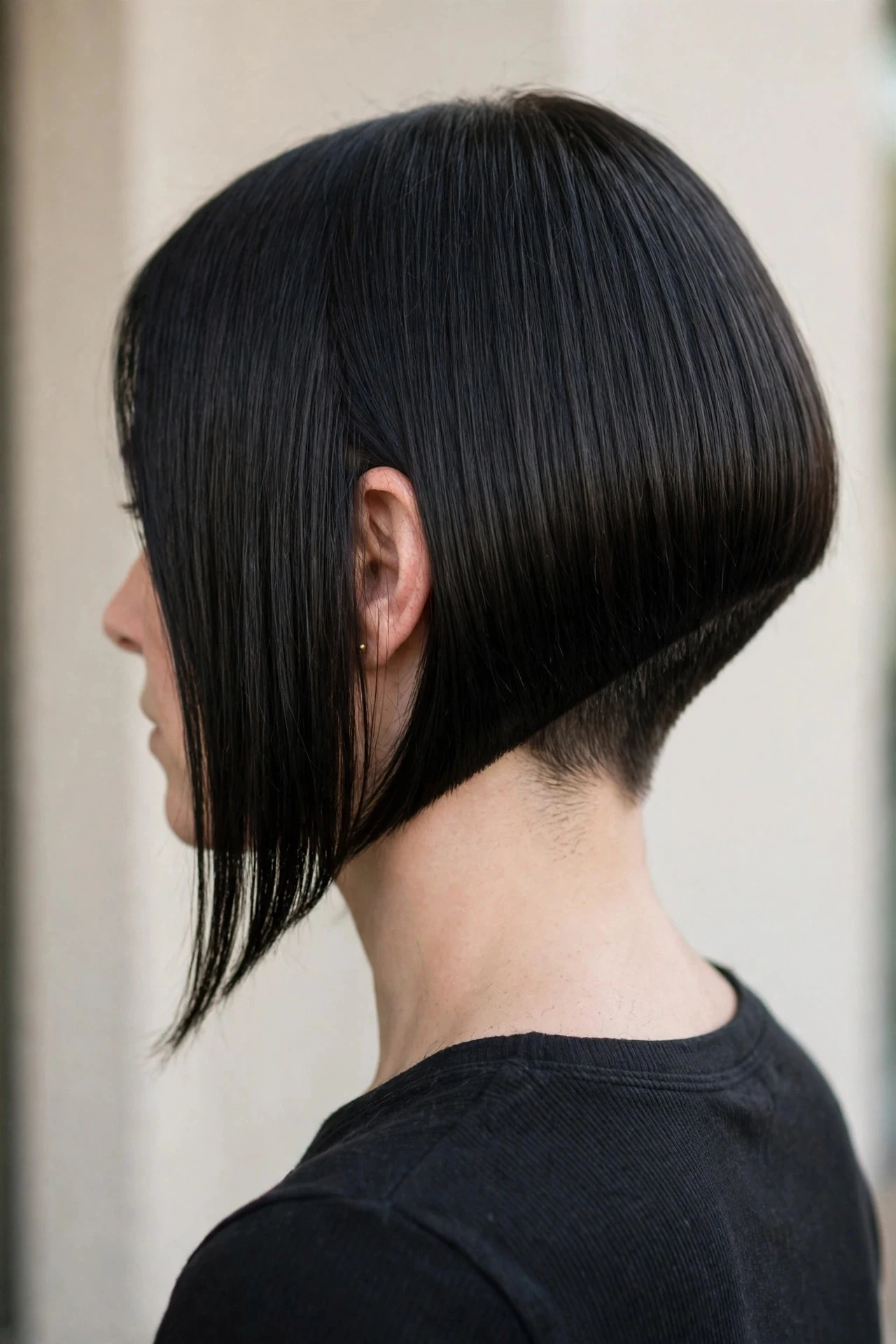
The A-line is the architectural bob with drama built in. The back sits shorter at the nape while the front pieces sweep longer toward the chin, drawing one long diagonal line across the jaw. On straight black hair the line is so clean it looks like the cut was planned with a set square.
Ask for the front to end at the chin and the back to sit a full inch shorter, with no layers in between. Keep it sleek with a flat iron, because any wave will hide the diagonal that makes this version special.
14. Espresso Architectural Bob with Mirror Shine
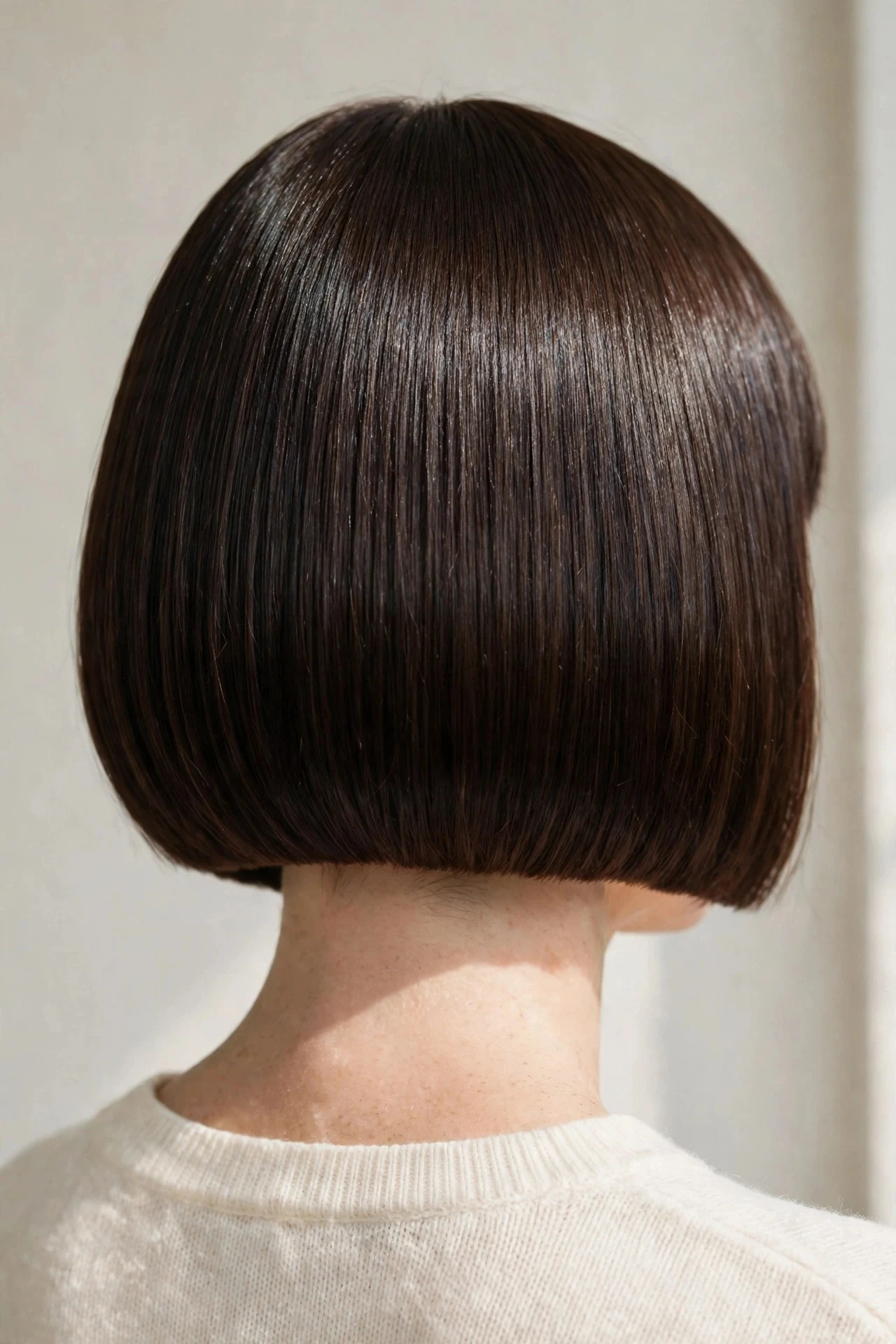
Espresso is the richest way to wear a graphic bob. The deep, almost-black brown has a warmth that pure black lacks, and on a blunt cut it reads as one solid block of colour with a mirror finish. The shine makes the precision obvious at a glance.
A gloss treatment at the salon every six weeks keeps espresso from going flat, and a colour-safe shampoo protects the depth between visits. The darker the colour, the more the blunt line shows — which is exactly what you want from this cut.
15. Scandi Bob with Soft Face-Framing Layers
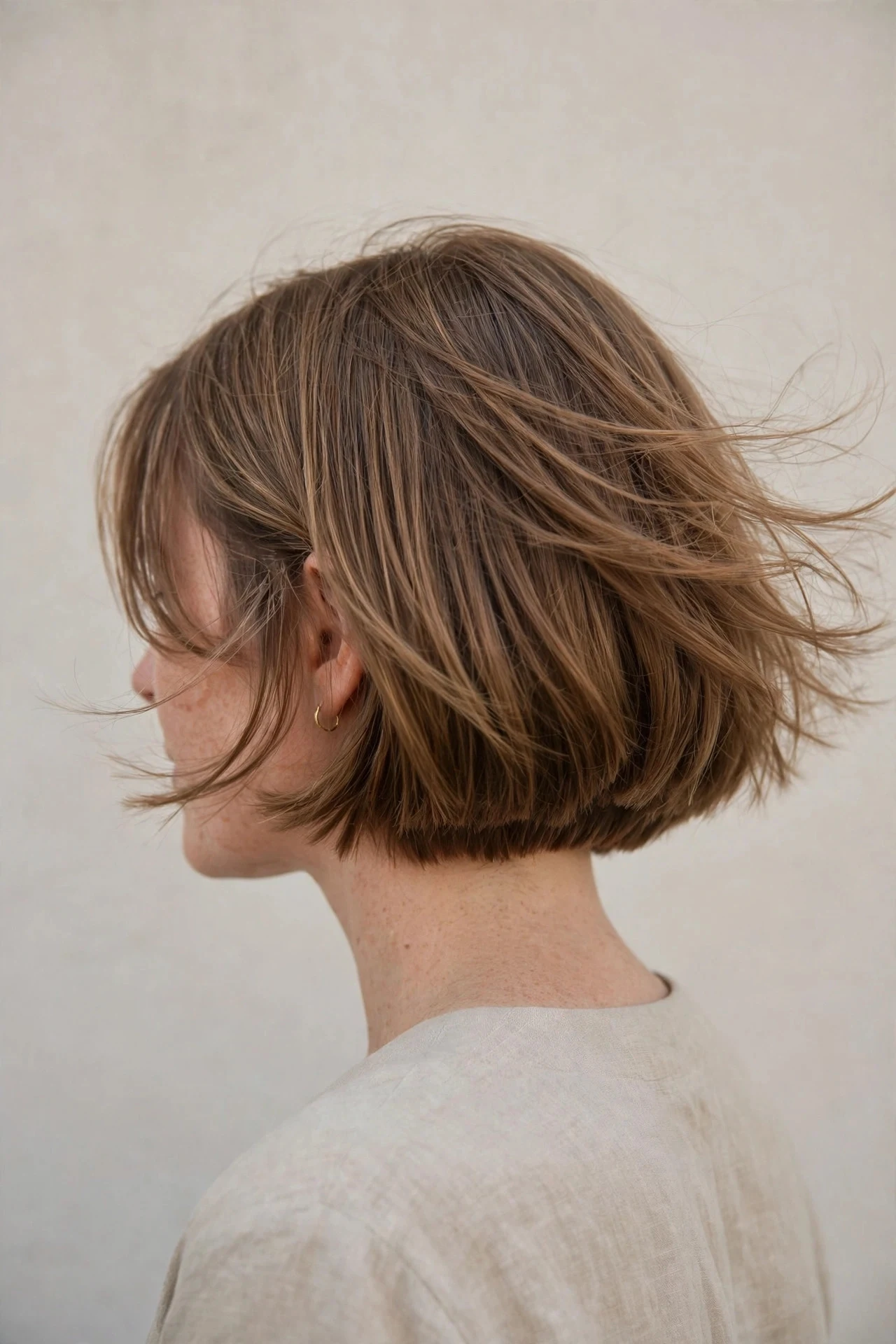
Strictly speaking, a true architectural bob has no layers at all — but the Scandi version allows one exception: a whisper of layering around the face only. These short front pieces soften the jawline and add movement where you see it most, while the back keeps its blunt, graphic shape.
Ask for the layering to stay in the front two inches of hair and nowhere else. If the layers creep toward the back, the cut loses its Scandi simplicity and turns into a regular layered bob, which is a different haircut entirely.
16. Architectural Bob with a Soft Flip at the Ends
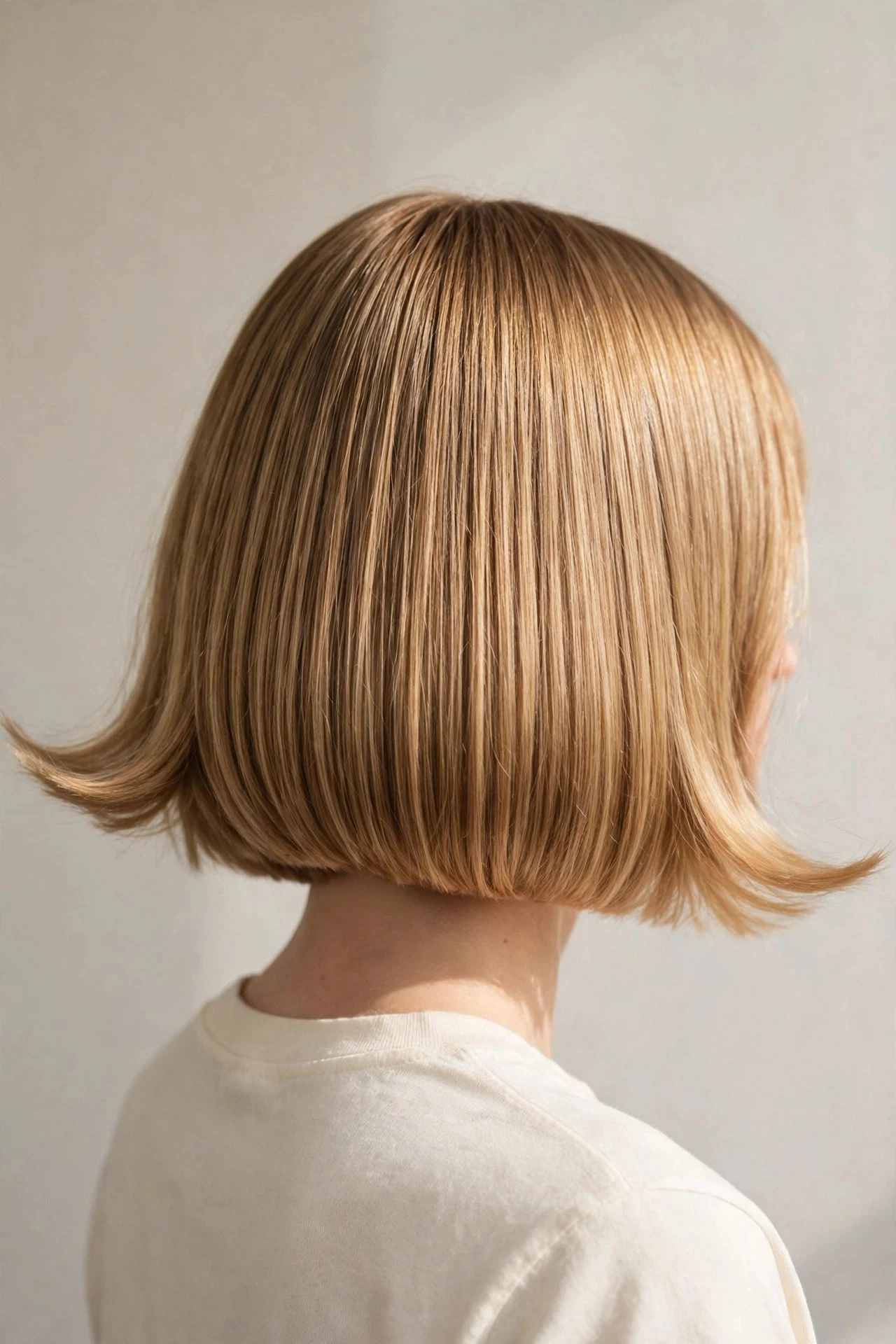
A soft flip at the ends is the playful side of the architectural bob. Instead of tucking under, the ends flick gently outward, giving the graphic shape a little swing. On honey blonde hair the flipped ends catch the light and make the whole cut feel lighter and more fun.
Flip the ends outward with a flat iron, bending just the last inch, and finish with a light-hold spray. The flip should be subtle — a flick, not a curl — so the blunt line underneath still reads clearly.
17. Copper Architectural Bob with Graphic Lines
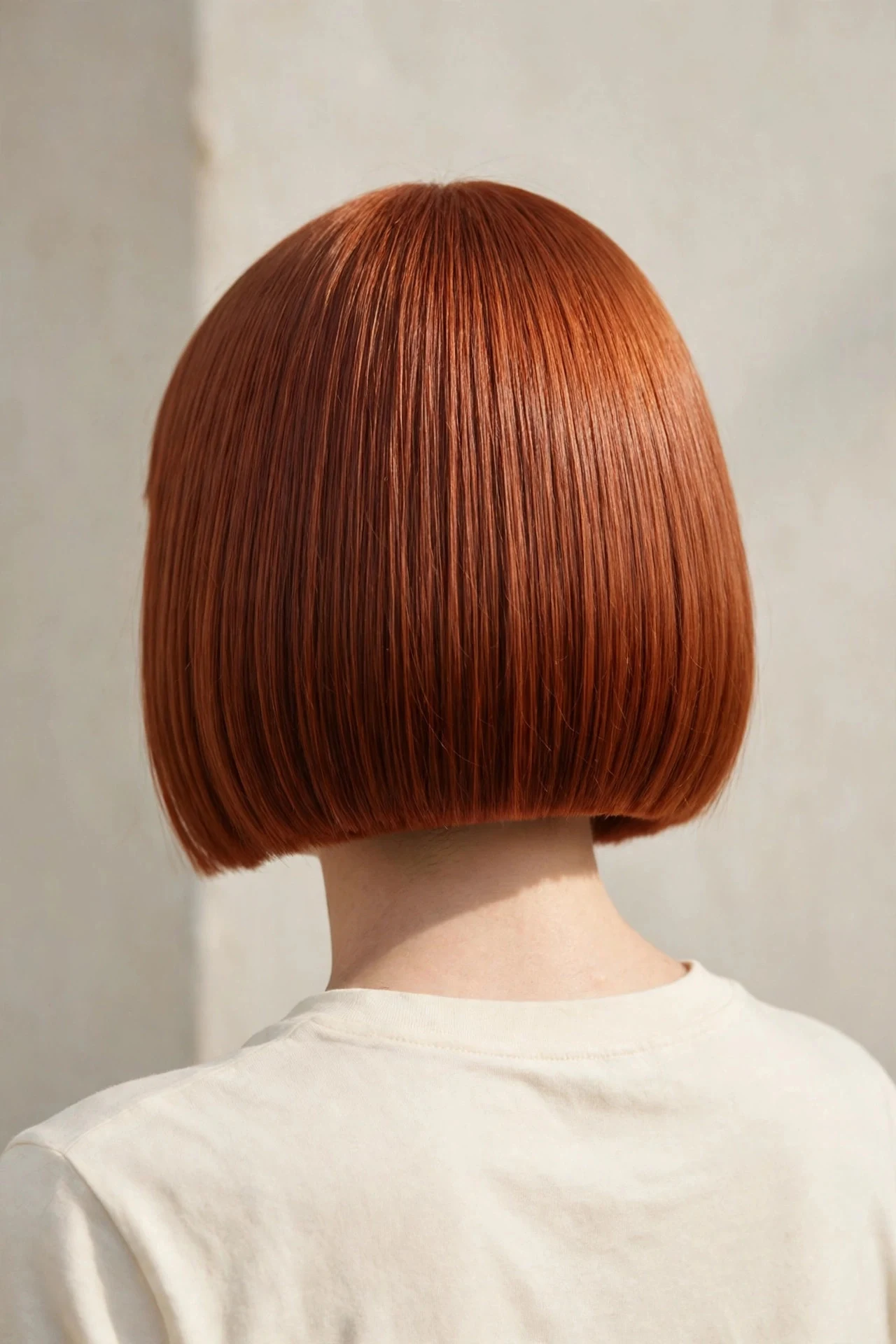
Copper is the boldest colour you can put on an architectural bob, and it works because the cut is so simple. The warm, fiery red turns the blunt perimeter into a frame, and the graphic line makes the colour look deliberate rather than loud. It is the version for anyone who wants their haircut noticed.
Copper fades faster than any other shade, so wash with cool water and a colour-safe shampoo, and book a gloss refresh every four to five weeks. The blunt ends show fading first, so keeping the colour fresh is what keeps this version looking expensive.
Tips for Keeping Your Architectural Bob Sharp
An architectural bob only looks architectural while the line is sharp, and the line is the first thing to go. The most common mistake is waiting too long between trims — once the ends grow uneven, the graphic shape turns into an ordinary bob. Book a trim every six weeks, and ask your stylist to dust the ends only, so the length stays while the line stays clean. Between visits, a flat iron on the ends once a week keeps the baseline crisp, and a silk pillowcase stops the ends from bending overnight. Never razor the ends, because razoring thins them out and destroys the density that makes the cut look expensive.
Frequently Asked Questions
What is an architectural bob?
An architectural bob is a graphic, blunt haircut with clean lines and no layers, usually falling at jaw level. The strong baseline creates an impression of density, which makes fine hair look thicker at the ends, and the precision of the shape is what gives the cut its expensive look.
What is the difference between an architectural bob and a Scandi bob?
The architectural bob is the sharper, more graphic version, worn sleek with a precise blunt line. The Scandi bob is its minimalist cousin: the same clean blunt perimeter and almost no layering, but worn softer and more natural, sleek or with a slight wave, and designed to look good air-dried with very little styling.
Does an architectural bob suit fine hair?
Yes, it is one of the best cuts for fine hair. With no layers to thin the ends out, the blunt baseline keeps all the density at the bottom, so fine hair reads thicker and fuller. Parisian stylists recommend it specifically for fine hair for exactly this reason.
How often should I trim an architectural bob?
Every six weeks. The graphic line is the whole point of the cut, and once the ends grow uneven the shape disappears. Regular dusting trims keep the baseline sharp while the length stays the same.
Can I wear an architectural bob with wavy or curly hair?
Yes, but the look changes. On wavy hair the blunt line softens into a Scandi-style bob with a slight wave, which is a recognised version of the trend. On curly hair, ask for the cut to be shaped dry, curl by curl, so the graphic perimeter survives the curl pattern instead of puffing out.
Conclusion
The architectural bob is leading 2027 for a simple reason: it makes the cut do the work instead of the styling. Whether you choose the razor-sharp classic, the soft Scandi version, the glass-hair finish, or the copper statement, the rule stays the same — a clean blunt line, almost no layers, and a trim every six weeks to keep the shape graphic. Save your favourite look from this list, take the photo to your stylist, and ask for an architectural bob by name.