January is the month of the fresh start, and nothing says fresh start quite like a haircut. But the best January haircut is not the most dramatic one — it is the one that still looks good in March. A cut that needs a long routine and three hot tools will be back in a ponytail by February, and a shape with a hard edge will show every inch of growth by spring.
This list gives you 18 fresh start haircuts for January that grow out beautifully. Every cut is built on the same rule: choose a shape that dries well, styles fast, and stays flattering between trims. You will find short, medium, and long options, plus choices for straight, wavy, and curly hair. Each idea notes who it suits best and how it grows out, so you can book with confidence.
Soft Blunt Bob That Dries Without a Fight
Start with a bob if you want the biggest change for the least daily work. A soft blunt edge gives straight and wavy hair a clean outline, and it dries into shape with a quick blow dry or even an air dry. The ends sit at chin to jaw length, so the shape frames your face without any fussy styling.
Ask your stylist to soften the very ends so the line looks lived-in rather than razor sharp. As it grows, a soft blunt bob turns into a lob on its own, which means you get two haircuts for the price of one and a trim only every eight to ten weeks.

Long Layers That Keep Your Length
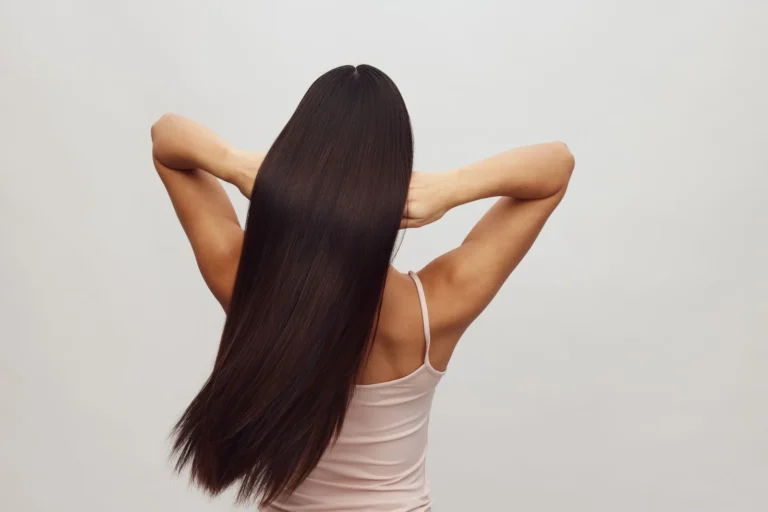
Cutting a lot off is not the only way to start fresh. Long layers remove weight through the ends so your hair swings more and holds a curl better, while you keep the length you worked so hard for. It is the reset for anyone who loves long hair but is bored of it sitting flat.
Ask for the shortest layer to start around the collarbone, so the shape grows out as a soft cascade instead of a shelf. This cut is kind to wavy and thick hair, and it needs almost no styling — a little texture spray on damp hair is enough on most days.

Curtain Bangs That Grow Out Without an Awkward Phase
Bangs have a reputation for a messy grow out, but curtain bangs are the exception. They part in the middle and sweep to each side, so as they get longer they blend straight into your layers. A slightly longer fringe also needs less frequent trimming than a straight-across bang.
This is the smallest change on the list with the biggest payoff. Curtain bangs soften a strong jawline, flatter almost every face shape, and work on straight, wavy, and curly hair. Ask for them to start at cheekbone length so they have room to grow gracefully.

Textured Pixie for a Bold January Reset
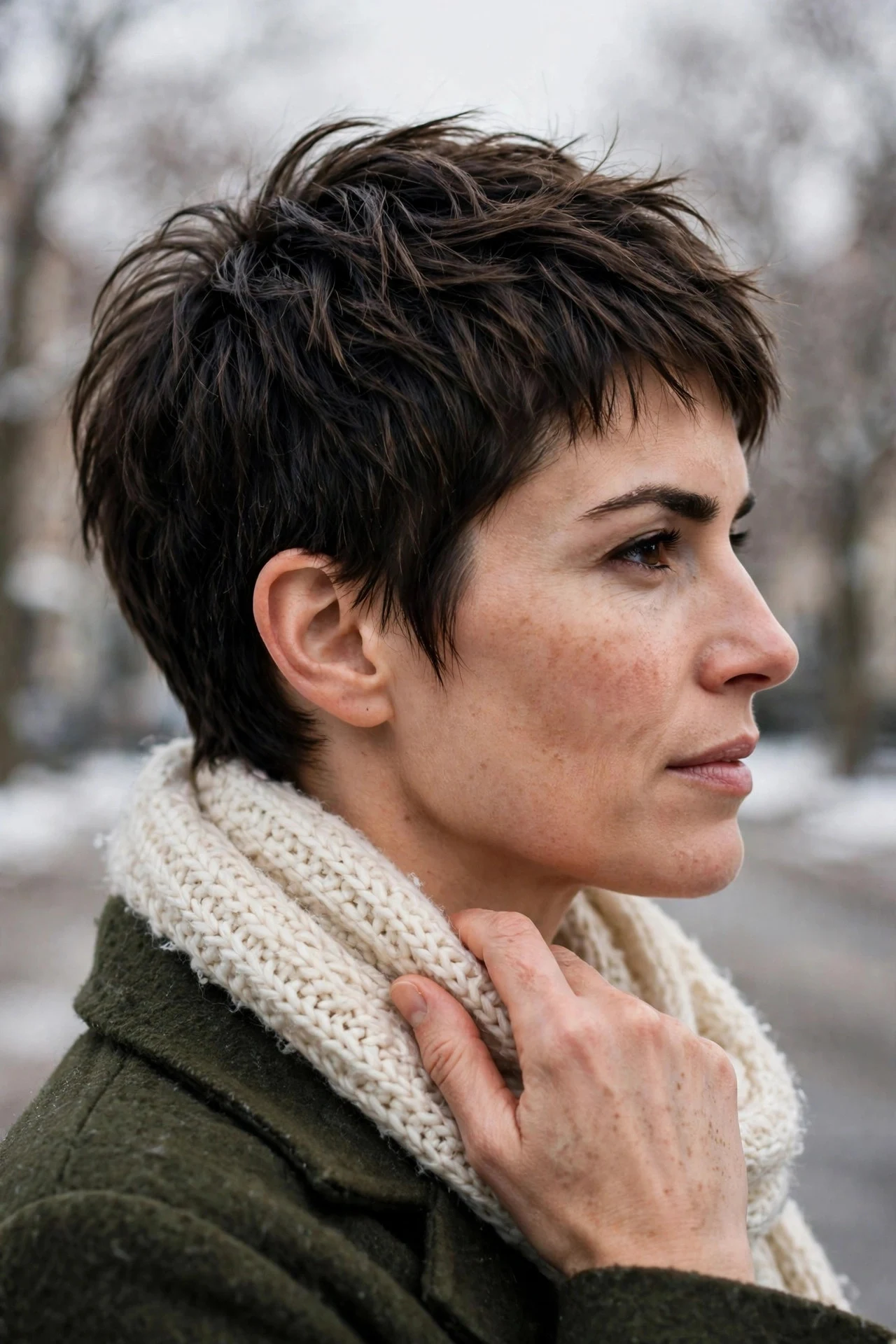
If you are ready for a dramatic change, a textured pixie asks for the least morning time of any cut on this list. Short layers on top with shorter sides keep it light and easy to shape with your fingers, and a dab of paste is all the styling it needs.
A pixie grows out in stages, and the trick is to keep the back tapered while the top lengthens — that way it moves toward a bixie instead of going shapeless. Book a tidy-up every six weeks, and enjoy the five-minute mornings in between.
Shaggy Layers for Waves and Natural Texture
A shaggy cut puts shorter layers around the crown and longer ones through the ends, which gives wavy and curly hair movement and volume without any heat styling. It is the January cut for anyone who wants to work with their natural texture instead of fighting it.
The best part is the grow out. Shaggy layers soften into long, lived-in layers over two or three months, so the shape never looks overgrown — it just looks more relaxed. A little curl cream scrunched into damp hair is the whole routine.

The Dusting Trim for Anyone Not Ready to Cut
Not every fresh start needs scissors with ambition. A dusting trim takes off only the frayed tips and keeps your length and style almost exactly the same. It is the right choice if you are growing your hair out or you simply are not ready for a big change yet.
Ask your stylist to dust the ends every eight weeks and to check the layers for split ends too. Healthy ends reflect more light, so your hair looks shinier and thicker the same day — sometimes a trim is all the reset you need.
Cloud Bob with Soft Internal Layers
The cloud bob hits chin to jaw length with subtle internal layers that you cannot see from the outside. The layers remove weight from the inside, so the hair feels airy and light while the outline stays smooth and polished.
This cut is made for fine to medium hair that goes flat by midday. It needs only a little texturizing spray at the roots, and it air-dries beautifully. As it grows, the internal layers keep the shape from going triangular, so it stays flattering for a full two to three months.

Ghost Layers for Invisible Volume on Fine Hair
Ghost layers are cut one to two inches from the longest pieces at an angle, so they blend in completely while adding real lift at the crown. Fine hair looks fuller without any visible layering, which is why this is the quiet secret behind so many good January haircuts.
Ask your stylist to keep the layers hidden in the interior of the cut and to leave the perimeter solid. The result air-dries with more body than a one-length cut, and it grows out without any awkward steps because there is no shelf to grow through.

Face-Framing Layers That Grow Into Curtain Bangs
Face-framing layers are the low-commitment cousin of curtain bangs. They start at the cheekbones and sweep back into the rest of your hair, opening up your face and adding movement around the front without changing your overall length.
Here is the clever part: if you let them grow, face-framing layers become curtain bangs on their own, and if you trim them, they stay as layers. Either way there is no awkward phase. They suit every face shape and every length from a lob to long hair.

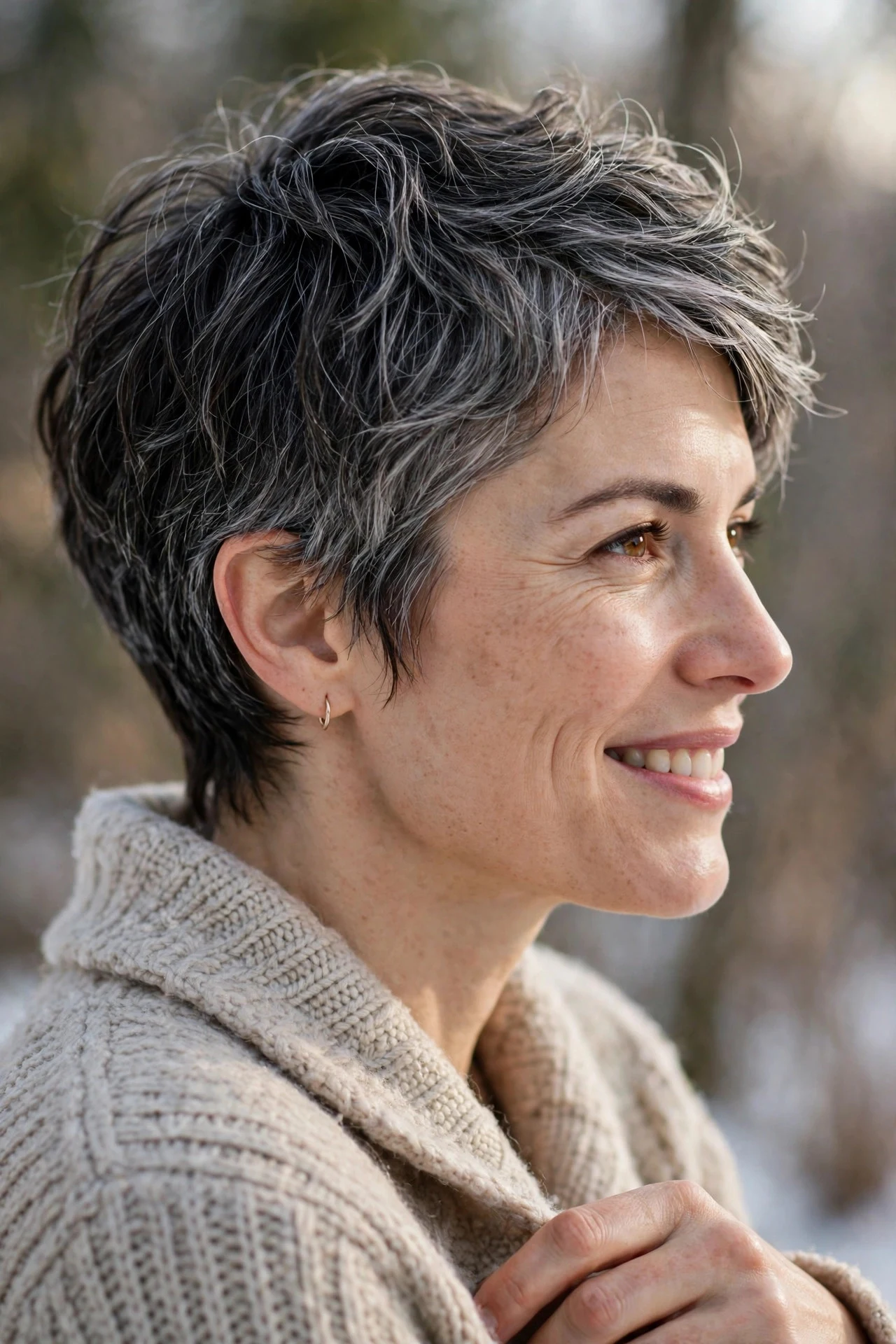
Grown-Out Crop That Styles Itself
A grown-out crop is the answer if you had a pixie last year and now want something softer. The back stays tapered while the top and sides lengthen, so the cut keeps its shape for weeks and slowly becomes a short bob instead of going wild.
This is one of the easiest cuts to live with in winter because it air-dries in minutes and never fights a hat. A little texture paste scrunched through the top is the whole morning routine, and a tidy-up every eight weeks keeps the shape clean.
Wispy Bangs with Long, Lived-In Layers
Wispy bangs are lighter and softer than a blunt fringe, which makes them the safest bang choice if you are nervous about cutting one. They blend into long layers so well that you can barely tell where the bangs end and the layers begin.
They grow out beautifully because they were never a hard line to begin with — they simply get longer and softer. Pair them with long, lived-in layers and a centre part, and you have a cut that looks effortless from the salon chair to the eight-week mark.

Layered Lob That Survives Winter Hats and Scarves
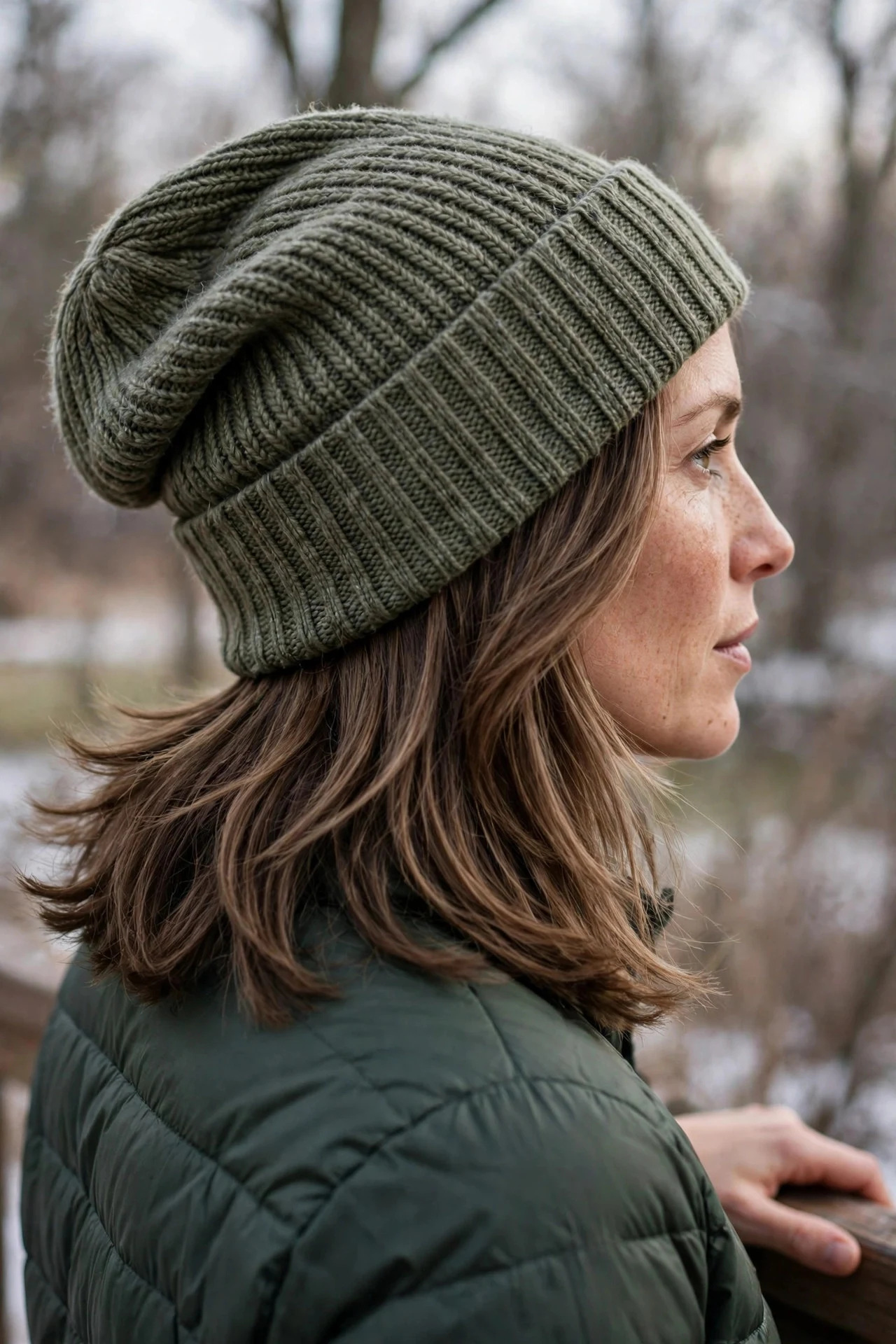
A layered lob is the shoulder-length cut that handles January weather best. The layers keep it from going flat under a beanie, and the length is long enough to tuck behind your ears or pull into a low ponytail on the coldest days.
Ask for soft layers through the ends rather than short ones at the crown, so the shape stays smooth when you take the hat off. A quick shake and a little dry shampoo at the roots brings it straight back to life.
Curly Baby Bob That Works With Your Texture
A curly baby bob is cut to follow your curl pattern instead of fighting it. The length sits at the chin when dry, the shape is rounded rather than triangular, and the curls are left long enough to spring up naturally.
This cut grows out in a soft, rounded shape because the layers are placed to support the curl, not to thin it out. Ask your stylist to cut it dry, curl by curl, so the shape is right from day one — and skip the daily heat entirely.

Blunt Lob with a Hidden Undercut for Thick Hair
Thick hair can make a blunt lob feel heavy, but a hidden undercut fixes that without changing the look. A small section is taken out underneath at the nape, so the hair sits flatter, dries faster, and swings more freely.
From the outside, all anyone sees is a clean, polished blunt line. As it grows, the undercut simply grows with it and never shows, so you get all the lightness with none of the awkward grow-out that a visible undercut can bring.

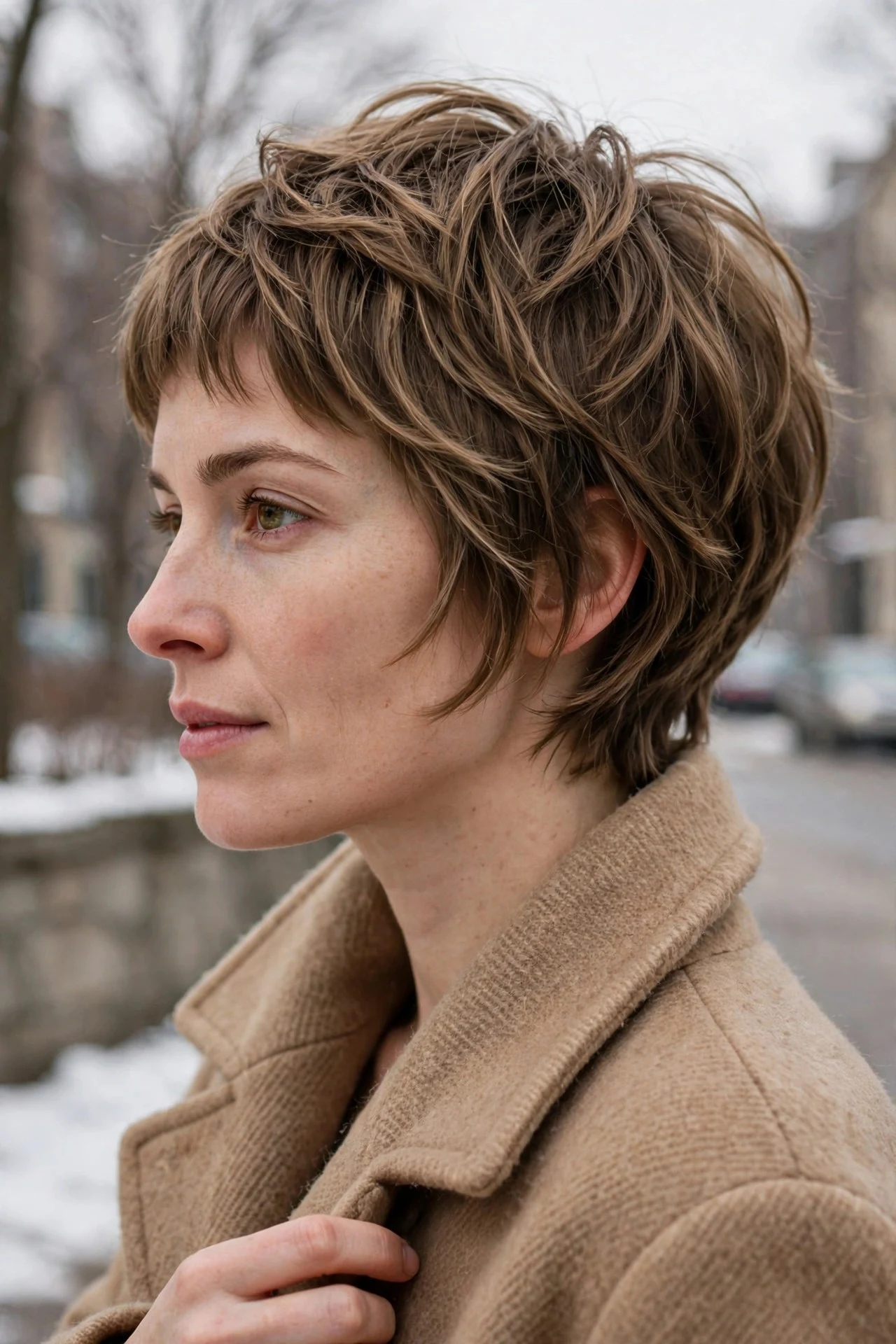
Pixie-to-Bob Bridge Cut for Growing Out a Pixie
Growing out a pixie is the hardest grow-out there is, and this bridge cut is built for it. The nape stays tapered while the top and sides catch up, so you always have a shape — never the in-between stage that makes people reach for a hat.
Book a tidy-up every six to eight weeks and ask the stylist to only touch the back and the edges. In three to four months you will have a soft short bob, and you will never have had a bad-hair month on the way there.
Soft U-Shaped Cut for Long Hair
A U-shaped cut gives long hair a gentle curve at the back instead of a straight line, which adds movement without any visible layers. The front stays long and the back dips slightly lower in the middle, so the shape looks full and healthy from every angle.
It is the lowest-maintenance long cut on this list because there is nothing to grow out — the shape simply gets longer. Ask for the curve to be soft rather than deep, and pair it with a dusting trim every ten weeks to keep the ends glossy.

Bottleneck Bangs with Shoulder-Length Layers
Bottleneck bangs start narrow at the top and widen at the cheekbones, like the neck of a bottle. They frame the eyes beautifully, and because they are longer at the sides they blend into shoulder-length layers with no hard edge anywhere.
This is the bang to choose if curtain bangs feel too wide for your face. They grow out by simply becoming longer layers, so there is no growing-out phase to survive — just a shape that keeps getting softer.

The One-Length Reset for Healthy Ends
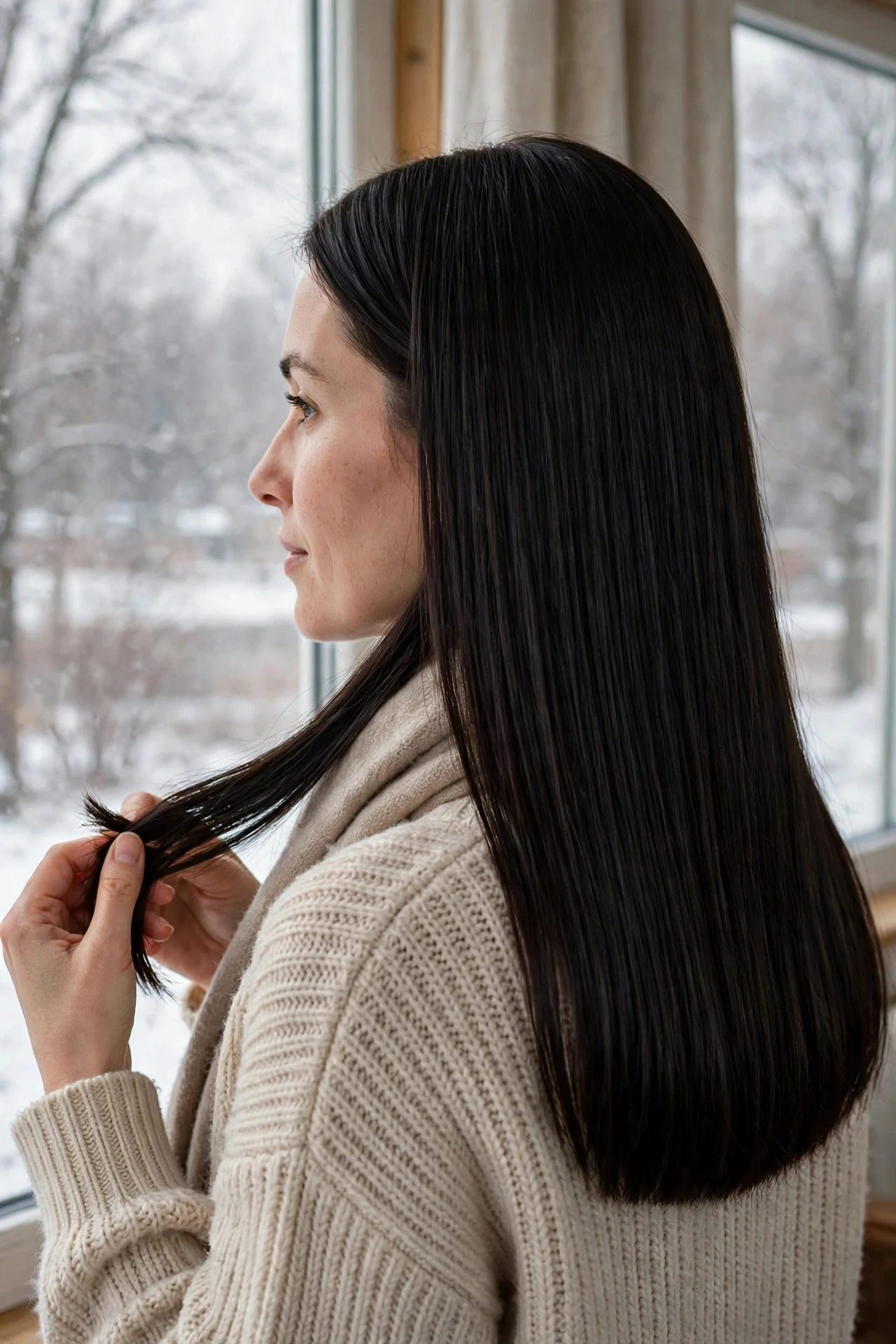
Sometimes the freshest start is the simplest one: one length, no layers, perfectly healthy ends. This cut removes all the damage from last year in one go and gives you a clean base to grow from, with a blunt line that looks expensive and intentional.
One-length hair grows out as one-length hair, so there is genuinely nothing to grow through. Keep the ends trimmed every eight to ten weeks, add a weekly mask in the dry winter months, and watch it get longer and shinier all year.

How to Make Your January Cut Last Until Spring
Book the cut for the second week of January, not the first — the sharp edges soften in a few days and the shape looks natural by the time you are back at work. Tell your stylist how often you are willing to come back, and let that decide the shape: eight to twelve weeks between trims means soft layers and lived-in lines, not hard geometry.
Winter air is dry, so switch to a weekly hair mask and turn the heat tools down a notch. A cut that air-dries well saves your hair from daily heat damage, and healthy hair always grows out better than damaged hair.
Frequently Asked Questions
What is the best haircut for January if I want low maintenance?
A soft blunt bob, a cloud bob, or long layers are the lowest-maintenance January cuts. They dry fast, style with almost no tools, and hold their shape for eight to twelve weeks. Avoid sharp geometric cuts that need a trim every four weeks to keep their line.
Which haircut grows out the best?
Curtain bangs, face-framing layers, shaggy layers, and ghost layers grow out the best because they have no hard edge to grow through. They simply get longer and softer, so there is no awkward in-between stage.
Should I cut my hair short for a fresh start in January?
Only if you want short hair for its own sake. A fresh start does not have to mean a big chop — long layers, a dusting trim, or curtain bangs can feel just as new, and they are easier to live with if you change your mind.
How often should I trim a January haircut?
Soft, layered cuts need a trim every eight to twelve weeks. Pixies and sharp bobs need one every four to six weeks to keep their shape. Ask your stylist at the appointment — the right interval depends on the shape you choose.
Can I get bangs in January without regretting them by March?
Yes, if you choose a grow-out-friendly fringe: curtain bangs, wispy bangs, or bottleneck bangs. All three blend into layers as they lengthen, so there is no awkward phase. A straight-across blunt fringe is the one to avoid if you are unsure.
Conclusion
The best January haircut is the one you still love in March. Choose a shape that dries well, styles in minutes, and grows out without an awkward phase — soft bobs, curtain bangs, lived-in layers, or a simple healthy trim. Book it in the second week of January, tell your stylist how often you will come back, and let the cut do the work for you all winter long.